07906 376342


Where does it like to grow?
It likes soil that’s not too damp, in slight shade. It’s happy in the ground (where it will spread, rampantly, if allowed!), or in a fair-sized pot. Originally it was a Mediterranean plant.
What does Lemon Balm look like?
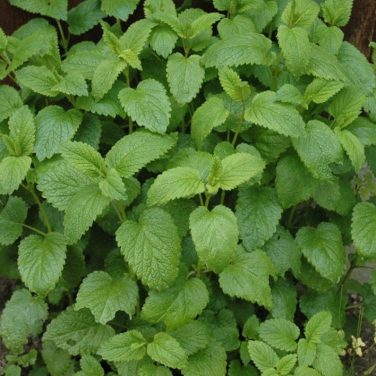
It’s upright, lemon-scented, deeply-toothed greeny-yellow leaves, with prominent veins. It has small white flower in late Spring/ early Summer.
When to gather Lemon Balm, and what parts of the plant to use:
May to August; the leaves mainly, but also the flowers. It’s better to use it fresh, than to dry it, due to its high levels of aromatic oils.
Is Lemon Balm safe?
It’s advised not to over-consume, if you have an underactive thyroid gland (hypothyroidism), or if you take Thyroxine medication.
A herb associated historically with bees:
It has an association with bees, and honey, as beekeepers used to rub Melissa on their bee hives, to attract the bees. ‘Mel’ means ‘honey bee’ in Greek.
What is Lemon Balm traditionally used for in herbal medicine?
- The mind – is has a calming action, and is also mildly uplifting. Some find that it has a slight sedative action.
- The digestion – it is calming and soothing (like many of the mint family plants), especially if there is wind and spasm; it can also help to reduce loose bowels caused by anxiety. Melissa can also help the digestion to digest food (before and after food), through its slightly bitter taste.
- The circulation – is can be calming for a stressed circulation, and may help to relieve stress-induced palpitations.
- The lungs – It has a relaxing action, and can help to relieve stubborn coughs as it has a decongestant action.
- The female reproductive organs – it is a wonderful ally for painful and irregular periods, and in reducing hot flashes and mood fluctuations in menopause.
- The skin, topically – it can be used as a treatment for herpes simplex (cold sore virus), and to relieve muscle pain. Can be used as an antiseptic for minor cuts.
Using Lemon Balm in the kitchen
Out of every herb I find that people grow in their gardens, this is the one that goes underused the most. If you have it, I definitely recommend using it!
A standard Pesto recipe:
Ingredients:
- 2 cups of fresh herb leaves (basil, lemon balm etc)
- ½ cup of grated Parmesan (or Vegan substitute)
- ½ cup of olive oil
- 1/3 cup of pine nuts (or almonds, or walnuts)
- 2 garlic cloves, minced or pounded
- Salt and pepper to taste (more pepper than salt, though)
Use a food processor (pulsing) or pestle and mortar to blend and crush the herbs and pine nuts. Add the garlic and cheese and mix well. Add olive oil little by little until the right consistency. Add salt and pepper. Refrigerate and use with salad, pasta, crackers, toast – anything where pesto might be appropriate!
Other ways you can use herbs in the kitchen, including lemon balm:
- Salad leaves – experiment with the unusual! Lemon balm, hyssop, lovage (only small amounts of this one though, it’s strongly celery tasting!), dandelion leaves all add to a fantastic green salad!
- Soup – never underestimate the joy of adding different herbs, like lovage, to a soup
- Marinades
- Infused oils for drizzling salad or cooking with
- Infused vinegars
- Teas / Infusions – For an infusion, a heaped teaspoon of leaf (fresh or dry), with boiling water poured over the top, and steeped for 5-10 minutes will make a good brew. 3 mugs a day is usually adequate.
References:
Image: © Hannah Sylvester
‘A Woman’s Book of Herbs’ by Elisabeth Brooke
‘The Complete Herbal Tutor’ by Anne McIntyre
‘The Wild Flower Key’ by Francis Rose